Description
BP/USP/FCC/E332(ii)
A high-purity, versatile potassium salt of citric acid, ideal for use in food, pharmaceuticals, and sports nutrition products.
Applications:
- Food Industry: Acts as a pH regulator and stabilizer in beverages, processed foods, and baked goods.
- Pharma: Used in formulations to regulate pH, stabilize medicines, and as an active ingredient in treatments for urinary alkalization.
- Supplements: An effective electrolyte, supporting hydration and muscle function in sports drinks and supplements.
Key Benefits:
- High Purity: Manufactured to meet the strictest quality standards.
- Excellent Solubility: Dissolves quickly in water, making it perfect for a variety of formulations.
- Sustainability: Produced with a focus on environmentally-friendly practices
DEFINITION
Potassium citrate contains not less than 99.0 per cent and not more than the equivalent of 101.0 per cent of tripotassium 2-hydroxypropane-1,2,3-tricarboxylate, calculated with reference to the anhydrous substance.
CHARACTERS
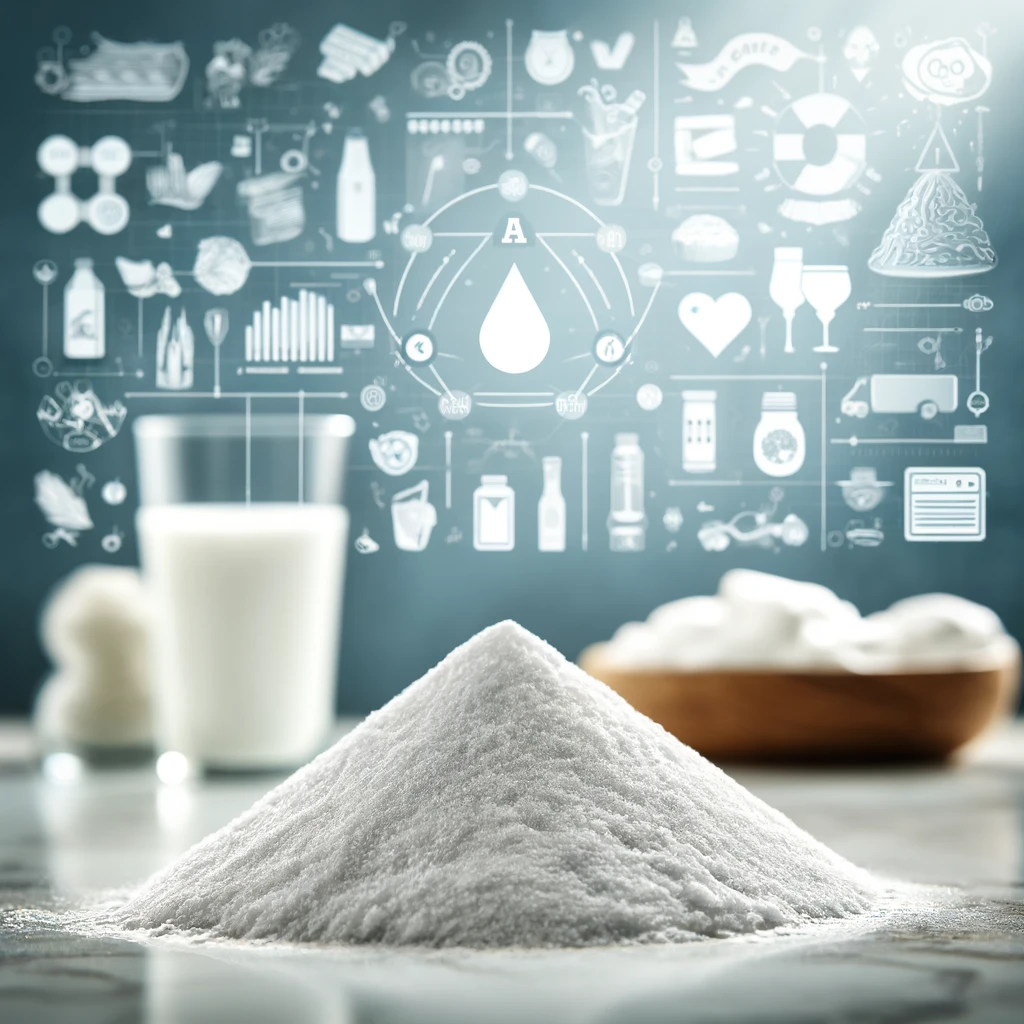
A white, granular powder or transparent crystals, hygroscopic, very soluble in water, practically insoluble in alcohol.
IDENTIFICATION
A. To 1 ml of solution S (see Tests) add 4 ml of water. The solution gives the reaction of citrates.
B. 0.5 ml of solution S gives reaction of potassium.
TESTS
Solution S
Dissolve 10.0 g in carbon dioxide-free water prepared from distilled water and dilute to 100 ml with the same solvent.
Appearance of solution
Solution S is clear and colourless.
Acidity or alkalinity
To 10 ml of solution S add 0.1 ml of phenolphthalein solution. Not more than 0.2 ml of 0.1 M hydrochloric acid or 0.1 M sodium hydroxide is required to change the colour of the indicator.
Readily carbonizable substances
To 0.20 g of the powdered substance to be examined add 10 ml of sulphuric acid and heat in a water-bath at 90 ± 1°C for 60 min. Cool rapidly. The solution is not more intensely coloured than reference solution.
Chlorides
Dilute 10 ml of solution S to 15 ml with water. The solution complies with the limit test for chlorides (50 ppm).
Oxalates
Dissolve 0.50 g in 4 ml of water, add 3 ml of hydrochloric acid and 1 g of granulated zinc and heat on a water-bath for 1 min. Allow to stand for 2 min, decant the liquid into a test-tube containing 0.25 ml of a 10 g/l solution of phenylhydrazine hydrochloride and heat to boiling. Cool rapidly, transfer to a graduated cylinder and add an equal volume of hydrochloric acid and 0.25 ml of potassium ferricyanide solution. Shake and allow to stand for 30 min. Any pink colour in the solution is not more intense than that in a standard prepared at the same time and in the same manner using 4 ml of a 0.05 g/l solution of oxalic acid (300 ppm).
Sulphates
To 10 ml of solution S add 2 ml of hydrochloric acid and dilute to 15 ml with distilled water. The solution complies with the limit test for sulphates (150 ppm).
Heavy metals
12 ml of solution S complies with limit test A for heavy metals (10 ppm).
Sodium
Not more than 0.3 per cent of Na, determined by atomic emission spectrometry.
Water
4.0 per cent to 7.0 per cent, determined on 0.500 g by the semi-micro determination of water. After adding the substance to be examined, stir for 15 min before titrating.
Potassium Citrate USP grade Specifications
Potassium Citrate
C6H5K3O7·H2O 324.41
1,2,3-Propanetricarboxylic acid, 2-hydroxy-, tripotassium salt, monohydrate.
Tripotassium citrate monohydrate [CAS 6100-05-6]
Anhydrous 306.40 [CAS 866-84-2]
Potassium Citrate contains not less than 99.0 percent and not more than 100.5 percent of C6H5K3O7, calculated on the dried basis.
Identification— A solution (1 in 10) responds to the tests for Potassium and for Citrate.
Alkalinity— A solution of 1.0 g in 20 mL of water is alkaline to litmus, but after the addition of 0.20 mL of 0.10 N sulfuric acid, no pink color is produced by the addition of 1 drop of phenolphthalein TS.
Loss on drying— Dry it at 180 for 4 hours: it loses between 3.0% and 6.0% of its weight.
Tartrate— To a solution of 1 g in 1.5 mL of water in a test tube add 1 mL of 6 N acetic acid, and scratch the walls of the test tube with a glass rod: no crystalline precipitate is formed.
Heavy metals— Dissolve 2 g in 25 mL of water, and proceed as directed for Test Preparation, except to use glacial acetic acid to adjust the pH: the limit is 0.001%.
Potassium Citrate FCC Food Grade Specifications
Tripotassium Citrate
KOOCCH2C(OH)(COOK)CH2COOK·H2O
C6H5K3O7·H2O Formula wt 324.41
INS: 332(ii) CAS: [6100-05-6]
DESCRIPTION
Potassium Citrate occurs as transparent crystals or as a white, granular powder. It is deliquescent when exposed to moist air. One gram dissolves in about 0.5 mL of water. It is almost insoluble in alcohol.
Function: Buffer; sequestrant; stabilizer.
REQUIREMENTS
Identification: A 1:20 aqueous solution gives positive tests for Potassium and for Citrate.
Assay: Not less than 99.0% and not more than 100.5% of C6H5K3O7 after drying.
Alkalinity: A 1:20 aqueous solution is alkaline to litmus, but after the addition of 0.2 mL of 0.1 N sulfuric acid to 10 mL of this solution, no pink color appears after the addition of 1 drop of phenolphthalein TS.
Lead: Not more than 2 mg/kg.
Loss on Drying: Between 3.0% and 6.0%.